Friday, May 5, 2017


As noted in my recent study, according to P. Vasunia in “Persian Responses: Political And Cultural Interaction with(in) the Achaemenid Empire” (2007), disciples of Pythagoras and Plato invoked Zoroaster in their works. There was strong receptivity to Iranian influences in Greece, the Aegean, and Anatolia…“Iranian influence on classical Greek and Roman culture is not just plausible but likely”…

[pic Highline College:  In 1976, an American anthropologist Edward T. Hall proposed the Iceberg Theory Model to understand culture…that is, the visible aspects of culture are “the tip of the iceberg”… it’s the lower hidden part that contain the most powerful forces… for educational purposes only]

Thursday, May 4, 2017


According to M. J. Olbrycht in a 2010 publication entitled “A companion to ancient Macedonia”:

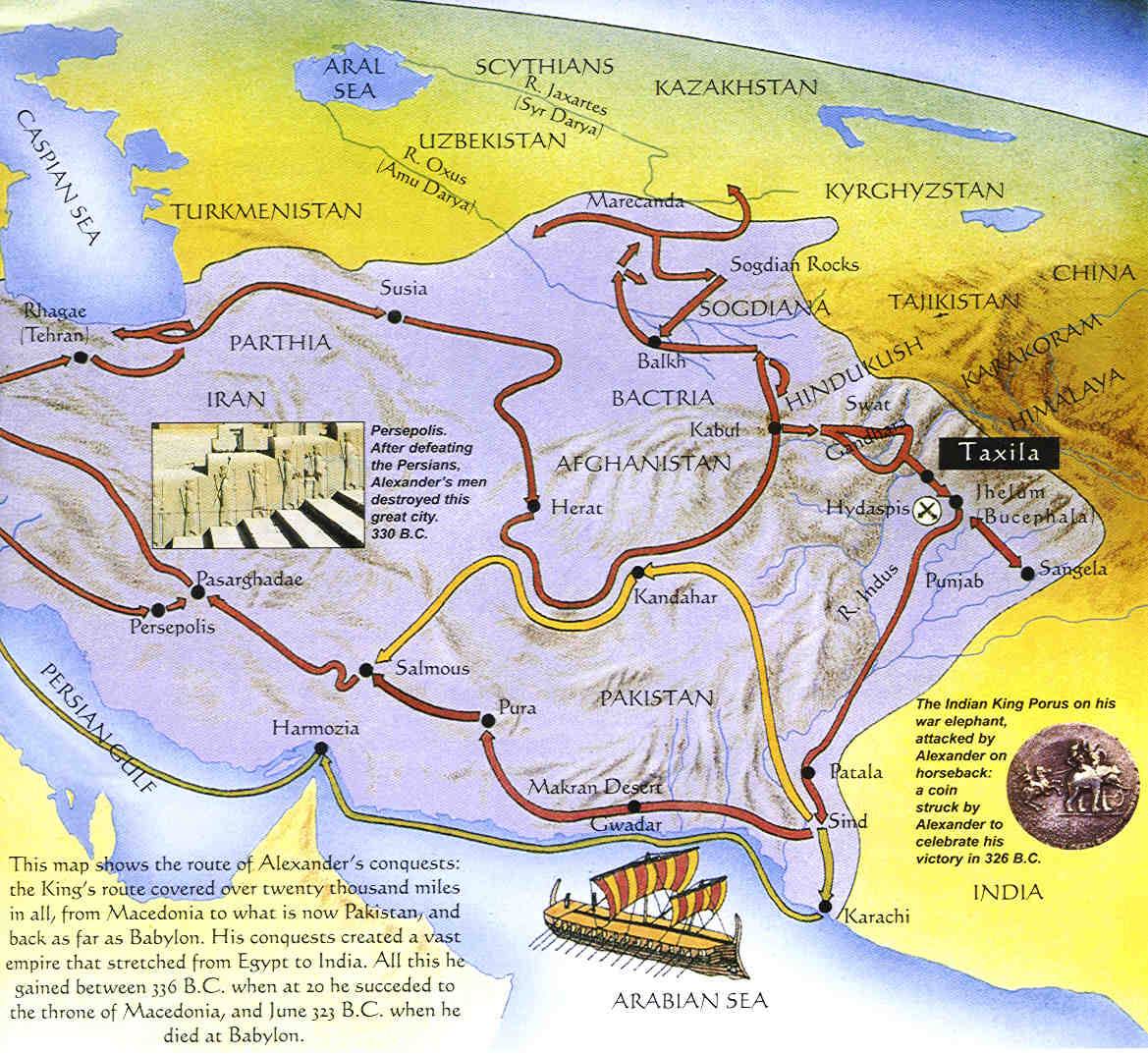
Alexander the Great’s father Philip II “built his power and created many institutions to imitate those known from the Achaemenid [Persian] Empire,” because “the most immediate model of a great monarchy was Persia.” Although Alexander later conquered the Achaemenid Persian Empire, he and his court went through Iranization making “Iranians the mainstay of his army.” Alexander’s Indian War (327-325 BCE) “should be seen as a Macedonian-Iranian victory” given Alexander’s army were mostly Iranian.

[pic Columbia University: for educational purposes only]

Tuesday, May 2, 2017


Often in the news media (exposed mostly as a mouthpiece for rogue intelligence), social media (people either awakening or insisting upon not awakening), and elsewhere, one runs across the notion that Iranians are different than “white” people…

As noted in my doctorate dissertation, “the omission or marginalization of the positioning of Iran and Iranians with respect to Indo-European history might be attributing to public misconceptions about categorization of white people.” In a 2017 article published by Independent, Lucy Pasha-Robinson wrote “students at SOAS University of London were calling for removal of white philosophers from curriculum to address diversity” in more accurately focusing on Asia and Africa…this is a stunning revelation as to our current demise and where we are headed!!! … the problem of “colonization” in educational materials is not based on the fact that white notables in various fields are reviewed, but that students are not taught that many peoples of Asia and Europe are part of the “white” group…

The ancient Roman author Pliny the Elder claimed the name of the “Caucasus” Mountains comes from the Iranian Scythian word “Graucasus” meaning white with snow…so the word associated with "white people" may very well be Iranian in origin...

Iranians are Aryans of the Indo-European family and have populated Asia and Europe since antiquity… Iranians as well as many others are white…although race refers to variation among humans, there is no such thing as “Middle East” let alone “Middle Eastern race”…

[pic: "Trace Evidence: Hair Forensic Science” Copyright © Texas Education Agency, 2011…for educational purposes only]

Sunday, April 30, 2017


In an August 6, 1915, letter to American author Nathan Haskell Dole, the great American poet Robert Frost wrote:

“The Zend Avesta was an old story with me when I was a bad little boy in San Francisco.”

[pic CFDRM (France): A set of 18th c. translation of ancient sacred Iranian text ZEND AVESTA by French orientalist Anquetil Duperron … for educational purposes only]

Saturday, April 29, 2017


As in many previous postings, I question Mainstream’s concept of so-called “Islamic Arts and Sciences” when referring to achievements of medieval southern Spain, Asia, and North Africa … therefore, it was a breakthrough when Jon Crumiller noted the following in a beautiful 2016 book entitled MASTERWORKS published by Fuel on the occasion of the World Chess Championship in New York…

Regarding chess sets designated as “Muslim Sets,” Crumiller wrote:

“Despite its name, the origin of the pattern is not entirely clear, and its attribution to Muslim culture is being subjected to the scrutiny of modern scholarship. Sheda Vasseghi, an historian whose field of expertise is Ancient Persia, which was an early adopter of chess, has said that the earliest-known ‘Muslim’ pattern pieces and the ancient Persian chess texts were already in existence before any Islamic presence. She noted that Islam did not arrive in Persia until the 7th century C.E., so the game of chess and the simple geometric design predates Islam, not vice versa.”

Although proper definitions and sources make it clear that Chess has nothing to do with Islam (http://www.etymonline.com/index.php?term=chess), one may simply point to declarations by Islamic theologians and authority that Chess is forbidden under Islamic rules (http://www.inter-islam.org/Prohibitions/Chess.html). 

When Islamists took control of a secular Iran under an Iranian Constitutional Monarchy in 1979, playing Chess in public was banned as forbidden under Islam.  In 2016, Saudi Arabia’s highest religious authority ruled playing Chess is forbidden in Islam since it falls under gambling and wasting of time (https://www.theguardian.com/world/2016/jan/21/chess-forbidden-in-islam-rules-saudi-arabia-grand-mufti).

[pic crumiller.com: A 19th c. chess set that is often labeled by Mainstream as “Islamic” or “Muslim” set…there is nothing about this game or fancy artwork that may be traced to the foundation of Islam in 6th c. Arabian Peninsula… for educational purposes only]

Sunday, April 23, 2017


TITLE of doctorate dissertation:
The Positioning of Iran and Iranians in the Origins of Western Civilization

BY:
Sheda Vasseghi (April 2017)
 
ABSTRACT:
The purpose of this qualitative case study was to explore how a select sample of college-level history textbooks position Iran and Iranians in the origins of Western Civilization. Western Civilization history marginalizes, misrepresents, misappropriates, and/or omits Iran’s positioning (Kincheloe, 2004; Daryaee, 2005; Anvarinejad, 2007; Daragahi, 2010; Ahkami, 2014; Vahdati, 2014). Further, the mainstream approach to teaching Western Civilization history includes the Judeo-Christian-Greco-Roman narrative. The researcher used a multi-faceted theoretical approach—decolonization, critical pedagogy, and Western Civilization History dilemma—since this study transcended historical revisionism. This collective case study involved eleven Western Civilization history textbooks that, according to the College Board’s College-Level Examination Program (CLEP), are most popular among American college faculty. The researcher reviewed and collected expert opinion on the following five themes: (1) terminology and definition of Iran, Iranians, and Iranian languages; (2) roots and origins of Iranian peoples; (3) which Iranian peoples are noted in general; (4) which Iranian peoples in ancient Europe are specifically noted; and (5) Iranians in connection with six unique Western Civilization attributes. The researcher selected experts specializing in Iranian, Western Civilization, and Indo-European studies in formulating a consensus on each theme. The researcher then compared expert opinion to content in surveyed textbooks. This study found that the surveyed textbooks overwhelmingly omitted, ill-defined, misrepresented, or marginalized Iran and Iranians in the origins of Western Civilization.

LINK to full study:
http://dune.une.edu/theses/108/